Just Moved? How to Find Your Fitness People in 30 Days (and Stop Hating Sundays)


Moving to a new city is supposed to be exciting. The first six months are usually not. Most people who relocate describe the same thing: a quiet apartment, a phone full of people in your old city, and Sundays that go on forever.
Here's the fix that's been quietly taking over cities everywhere: recurring fitness groups. The run-club explosion is now measurable, not anecdotal. The number of clubs on Strava nearly quadrupled in 2025 to around one million. A LADbible Group study found 72% of Gen Z run-club goers join partly to meet new people. Bloomberg has covered how gyms are replacing bars as Gen Z's social clubs, and CBS News and WWD were already reporting in 2024 on singles and new-movers ditching apps for run collectives. The framing across all of it is consistent and worth quoting:
"People want to see each other in their most raw state, no alcohol, in the morning." (Jordan Williams, Chicago Run Collective)
"There are so many people who come alone, meet friends, and then come back next week with those friends." (Lunge Run Club, a singles run club that now claims 50,000+ members across 8+ cities; notably, it started life as a swiping app before pivoting to in-person runs)
This guide is the 30-day version of how to make that work for you. It's specifically for people who:
- Just moved to a new city
- Don't know anyone yet
- Already value fitness (or are willing to start)
- Want friends, a gym buddy, or dates, and sometimes all three
If that's you, keep reading. The plan below is concrete, ordered, and based on what's actually working in 2026.
TL;DR: The 30-Day New-City Plan
| Week | What to do | Why |
|---|---|---|
| Week 1 | Pick ONE recurring fitness activity within walking/transit distance | Repetition is what builds friendships, not novelty |
| Week 2 | Show up 3+ times. Smile, say "see you Tuesday." | Same humans, same room, same time: that's the formula |
| Week 3 | Suggest a coffee or post-workout brunch with one regular | Move from "fitness acquaintance" to "friend" |
| Week 4 | Add a second activity in a different sport/community | Two circles beat one, and you're covered if you don't click with the first |
Do this. By day 30, you'll know 5 to 10 people by name and have at least one regular hang. That's not nothing. That's a city becoming yours.
Why fitness works for new-movers (when nothing else does)
Adult friendships are hard. Adult friendships in a new city are harder. The standard advice ("join a meetup," "get a hobby," "say yes to invitations") is correct but useless without structure. You need something that does four things at once:
- Puts the same humans in the same room repeatedly (you can't befriend strangers; you have to befriend regulars)
- Gives you something to talk about beyond the weather
- Doesn't require you to plan or initiate (which is hard when you're tired and lonely)
- Doubles as an activity you'd do anyway
Fitness, specifically recurring group fitness, is the only widely available answer that hits all four.
The science: 50 hours, 90 hours, 200 hours
A 2018 study in the Journal of Social and Personal Relationships found that it takes about 50 hours of time together to move from acquaintance to casual friend, 90 hours to become a friend, and 200+ hours to become a close friend (source).
A weekly hour-long fitness class with the same crew puts you at "friend" territory in under two years. Twice a week, under one. That's not magic, it's just math, plus the bonus that group exercise releases more endorphins than solo workouts, making each hour more bonding than ordinary social time.
Why it beats Bumble BFF, dating apps, and "just go to bars"
Honest assessment of the alternatives:
- Bumble BFF / friendship apps: chats die before you meet. The honest review from a recent user: "People like the idea of making friends more than actually doing it."
- Dating apps: optimized for time-on-app, not time-with-real-humans. New-movers also report matches hundreds of miles away because algorithms don't understand you just got here.
- Bars: alcohol-dependent, late-night, expensive, and fewer young adults are socializing this way at all.
- Coworker friendships: real, but bounded. You talk about work, you stop seeing them on weekends, and remote work makes this even thinner.
- Hobby groups (book clubs, board games): legit, but lower attendance frequency than fitness.
Fitness wins because it solves three problems in one slot in your calendar.
Top 5 fitness activities that work for new-movers
The activity needs to: (a) recur weekly, (b) attract regulars, (c) have a social ritual built in (post-workout coffee, group warm-up). These five fit the bill across most cities:
1. Run clubs
The explosion is no accident, and it kept accelerating: clubs on Strava nearly quadrupled in 2025 alone, with hiking and running clubs growing fastest. Run clubs are typically free, weekly, beginner-friendly, and end with coffee or brunch. Search "{your city} run club" or check Strava; most major cities have multiple at varying paces.
Why it works for new-movers: pace groups self-segment by ability so you're never embarrassed, the outdoor setting lowers the awkwardness floor, and the post-run coffee is where actual friendships form.
2. Group fitness classes (HIIT, spin, F45, CrossFit)
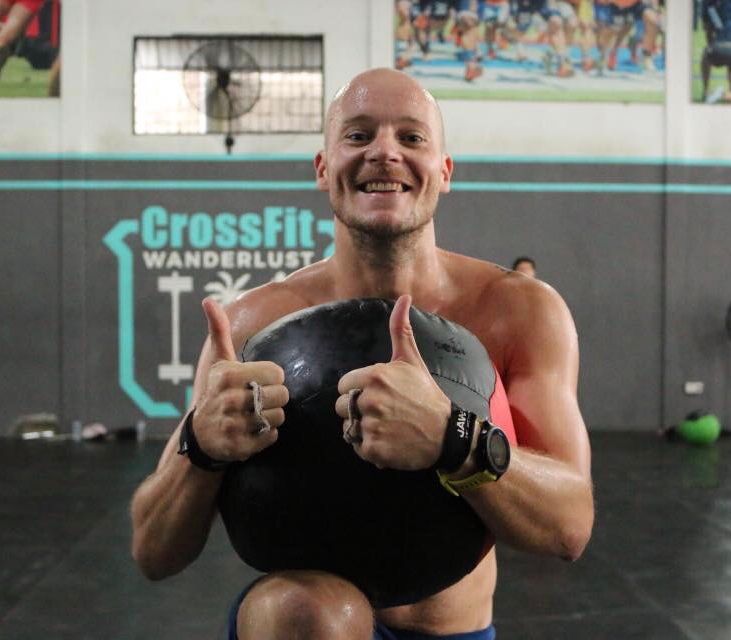
Look for classes with the same time slot every week, not "drop-in any time." Regulars matter more than the workout style. CrossFit boxes especially are aggressively social, and many studios have built-in regular-recognition.
Why it works: small studio sizes, partner work built into many classes, and gym staff usually facilitate introductions to new members.
3. Climbing gyms
Bouldering and roped climbing are unusually social. Climbers chat between attempts, share routes, give beta. If you climb at the same gym two or three times a week for a month, you'll know people.
Why it works: long sessions (1.5 to 2 hours), inherent waiting and resting, and a culture of "watch this attempt." Plus, the safety component (belaying) creates fast trust.
4. Recreational sports leagues
Soccer, basketball, volleyball, ultimate, kickball, dodgeball. Apps like Volo Sports and OpenSports run leagues in many cities. You're on a team, so the social work is half-done.
Why it works: forced repeated contact (8 to 10 weeks), team WhatsApp groups, and post-game drinks (or coffee, if you're not drinking).
5. Yoga and its post-class community
A specific yoga studio (not a chain you drop into randomly) where you go at the same time. Many studios run member events, retreats, and workshops; those are where the community happens, not the class itself.
Why it works: lower physical intensity makes conversation easier, and studios often deliberately cultivate community.
Whichever you pick, choose an activity that genuinely interests you. Your enthusiasm will show, and it makes connecting with others who share it much easier. If you're a gym rat, our guide on how to find new gym buddies applies directly in your new city.
The "go in once with a buddy" exception
If walking into a gym alone gives you anxiety (and according to Adidas's research, 1-in-3 people avoid the gym entirely because of intimidation), the run-club and class strategy might still feel like too much. There's a different play that works for this case: get someone to walk in with you once. After the first visit, the unfamiliar becomes familiar, and you can switch to the strategies above.
Brocnbells specifically supports this with a Find a Gym Buddy lander for whichever city you're in: match with someone who'll meet you at the entrance for your first session. (More on this in our gym anxiety guide.)
Using technology to skip the "where do I even start" stage
Fitness-meeting apps have multiplied in the past five years, and their quality varies wildly. The honest landscape:
- Strava: strong for running and cycling; clubs are now a core discovery tool (around one million clubs as of the 2025 Year in Sport report), and there's in-app messaging for coordinating with people you meet
- Meetup.com: broad but old; works well for fitness groups, less well for buddy-finding
- SweatPals (US only): events-first social fitness app with over 1 million users across 24 US markets; the strongest option for finding run clubs and group workouts if you've moved within the US
- Fitness-niche dating apps (Fitafy, Datefit, Surf): covered in our review; most have density issues outside major cities. Telling detail: the Lunge dating app, previously on this list, shut down and relaunched as an in-person singles run club
- Brocnbells: connects you with people for gym-buddy, friend-finding, AND dating in one place. The meeting features are free. We don't optimize for time-on-app; we optimize for time-to-meeting
If you've moved to a city where Brocnbells has a community, our city-specific pages will surface real local users. Use whichever job is foreground for you: find new friends, find a gym buddy, or find fitness dates. Many people start with friends and end up with all three. (City links below.)
Breaking the ice (the part most guides skip)
- Arrive early. New-movers especially benefit. The chat happens before class, not during.
- Suggest post-workout coffee or a smoothie. This is the conversion step from "fitness acquaintance" to "friend."
- Offer to be a workout buddy. If someone mentions a goal or struggle, say "I'd train for that with you." Most people say yes.
- Show up to the studio's special events. Workshops, charity runs, member appreciation nights. This is where the real community is, not the regular class.
- Be open and approachable. Smile. Make eye contact. Compliment someone's form or shoes. Sounds dorky; works.
- Ask for advice. Asking how someone deadlifts a certain way is a low-stakes way to start a conversation, and people love sharing what they know.
- Help someone else. Spot a confused beginner? Offer one tip. You'll make their day and possibly a friend.
Expanding beyond your first circle
Once the first community sticks (usually around week 4 of the plan), three moves widen the net fast:
- Join a second, different community. A run club plus a climbing gym reaches two completely different crowds.
- Volunteer at local fitness events. Charity runs, triathlons, and community health fairs attract exactly the people you want to meet, and shared volunteering bonds fast.
- Host your own meetup. Once you're comfortable, invite a few people from your gym for a weekend hike. Organizers become the center of their circle quickly.
Common challenges (and the honest answers)
1. Dealing with shyness or social anxiety
Challenge: You feel nervous about approaching new people or speaking up in group settings.
Solutions:
- Start small: Begin with a simple smile or "hello" to others in your fitness class.
- Use the activity as a conversation starter: Ask about the workout or for tips on a particular exercise.
- Arrive early or stay late: This will allow you to interact in a less crowded, more relaxed setting.
- Remember that others might feel the same way: Many people are nervous about making new friends too.
2. Managing time constraints
Challenge: As a busy professional, you struggle to find time for both workouts and socializing.
Solutions:
- Combine fitness and socializing: Choose group activities that serve both purposes.
- Schedule your workouts: Treat them like important meetings you can't miss.
- Use lunch breaks: Try lunchtime fitness classes or quick workout sessions with colleagues.
- Be efficient with your social time: Quality interactions matter more than quantity.
3. Handling fitness level differences
Challenge: You feel intimidated by more experienced fitness enthusiasts or worry about holding others back.
Solutions:
- Choose beginner-friendly classes or groups when starting out.
- Everyone starts somewhere: Even fit people were once beginners.
- Focus on your own progress, not comparing yourself to others.
- Be honest about your fitness level: Many people are happy to offer support and encouragement.
4. Handling potential romantic interests
Challenge: You're unsure how to handle romantic feelings or advances in a fitness setting.
Solutions:
- Keep interactions friendly but professional at first.
- Be clear about your intentions: Whether you're seeking friendship or open to dating.
- Use apps like Brocnbells where friendship and dating intent are explicit.
- If you're not interested, politely redirect the conversation to fitness topics.
Cities where Brocnbells has a strong community
Brocnbells works best where there's enough local member density. As of 2026, that's strongest in:
- Singapore: find new friends · find a gym buddy · find fitness dates
- Hong Kong: find new friends · find a gym buddy · find fitness dates
- Bangkok: find new friends · find a gym buddy · find fitness dates
- Kuala Lumpur: find new friends · find a gym buddy · find fitness dates
- Manila: find new friends · find a gym buddy · find fitness dates
- London: find new friends · find a gym buddy · find fitness dates
(Check our Cities page for the current full list.)
If your city isn't on that list yet, the strategies above still work. Just skip the Brocnbells step and go straight to local run clubs, gyms, and league apps.
The bottom line
Moving cities is one of the loneliest things a busy adult can do. Fitness, specifically recurring fitness with regulars, is the closest thing to a cheat code for fixing it. By day 30, you can know 5 to 10 people by name. By month 3, you can have a regular weekend hang. By month 6, you'll feel like the city is yours.
Pick one activity this week. Show up to it three times. The rest follows.
Sources
- Hall, J. A. (2018). How many hours does it take to make a friend? Journal of Social and Personal Relationships
- Cohen et al. (2010). Rowers' high: behavioural synchrony is correlated with elevated pain thresholds. Biology Letters
- CBS News: Singles are ditching dating apps for run clubs
- WWD: Run clubs are the new dating apps
- Adidas/Bumble research: gymtimidation as a barrier to fitness
- Strava Year in Sport 2025: clubs nearly 4x to about 1 million
- LADbible Group: 72% of Gen Z run-club goers go to meet new people
- Bloomberg: gyms are replacing bars in Gen Z's social and dating lives